With more than 30,000 attendees, nearly 800 exhibitors, and a growing focus on builders, startups, and physical AI, BEYOND Expo 2026 offered a snapshot of where technology innovation is heading next.
BEYOND Expo 2026 concluded in Macau after four days of exhibitions, startup competitions, product launches, investment discussions, hackathons, and industry forums that brought together more than 30,000 visitors from over 120 countries and regions. Held under the theme "AI: Digital to Physical," the event featured nearly 800 companies and more than 400 speakers, showcasing technologies spanning robotics, aviation, education, healthcare, wearables, smart homes, consumer electronics, sports technology, and artificial intelligence.
While artificial intelligence dominated many conversations throughout the event, the broader story extended beyond AI itself. Across startup showcases, investor sessions, developer gatherings, and product demonstrations, BEYOND Expo highlighted how innovation is increasingly moving from experimentation toward commercialization and from software into physical products and real-world applications.
At the same time, the event reflected a changing entrepreneurial landscape, where builders, developers, one-person companies, and startup founders are becoming increasingly important contributors to the innovation ecosystem.
Why Builders Are Taking Center Stage
One of the strongest messages from this year's event came not from a product launch, but from BEYOND Expo Co-Founder Dr. Lu Gang. Reflecting on the evolution of the event, Lu highlighted the organization's decision to place greater emphasis on programmers, developers, and one-person companies, often referred to as OPCs.
Speaking during the closing ceremony, Lu said:
"BEYOND Expo remains committed to its mission of 'Empowering Asia, Bridging the World' by being at the forefront of technology. We didn't just invite so-called big names in AI. This year for the first time we focused on OPCs (one-person companies) and paid more attention to programmers, because they have the potential to become unicorns in the future. The youngest hacker in our AI HACK Day was just nine years old. This is really the future."
The remarks reflect a broader trend emerging across startup ecosystems globally. Advances in AI development tools, cloud infrastructure, low-code platforms, and open-source technologies are enabling increasingly small teams to build products and launch companies. In some cases, individual founders can now access capabilities that previously required large engineering teams and significant capital.
The growing visibility of developers and independent builders at events such as BEYOND Expo suggests that entrepreneurship is becoming more accessible and more distributed.
Beyond Technology: Why Storytelling Still Matters
Another noteworthy message came from Kun Gao, founder of Crunchyroll, during the closing ceremony. While much of the event focused on technological innovation, Gao emphasized a challenge many founders continue to face: communicating their vision effectively.
According to Gao, startup founders must think beyond their technology and learn how to tell compelling stories capable of attracting investors, customers, and strategic partners. The observation is particularly relevant in today's startup environment. As access to technology becomes more democratized and product development cycles accelerate, differentiation increasingly depends on market positioning, customer understanding, and founder communication.
Technology alone is rarely enough. For startups competing in crowded markets, storytelling is often what transforms a promising product into an investable company.
Fund at First Pitch Offers a Glimpse Into Emerging Startup Trends
One of the event's flagship startup programs, Fund at First Pitch (FAFP), attracted more than 300 startup applicants. Six finalists advanced to the closing-stage competition, where they were evaluated by a judging panel that included Kun Gao, FutureX Capital Founder Cynthia Zhang, Lingotto Innovation Strategy Managing Partner Morgan Samet, and entrepreneur-investor Metta World Peace.
The finalist companies provided insight into the types of products currently capturing investor attention. Among the featured innovations were smart jewelry, wearable devices, connected consumer products, emotion-sensitive technologies, and intelligent sports equipment, including a smart canoe paddle and an emotion-responsive hugging bear.
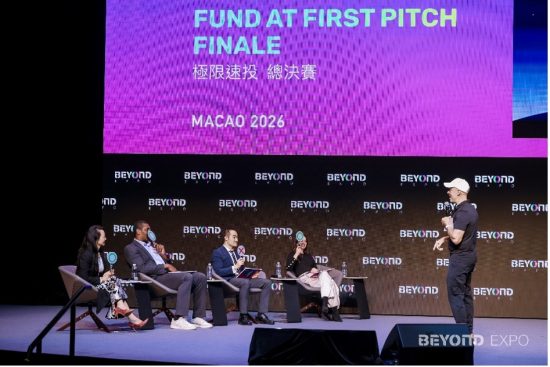
The diversity of ideas reflected a broader shift occurring across startup ecosystems. Rather than focusing exclusively on enterprise software or generative AI applications, many founders are exploring opportunities at the intersection of hardware, consumer experiences, wellness, and intelligent devices.
Physical AI Moves From Concept to Product
The event's theme, "AI: Digital to Physical," was visible across both the exhibition halls and product launch showcases. The BGlobal Product Launch platform featured a wide range of innovations, including Aerofugia's eVTOL aircraft technology, AI-powered smart glasses from iFLYTEK and METLEN, Look AI Agent's design tools, advanced hearing-assistance technologies, smart office products, beauty technology solutions, and robotics-related innovations.
Meanwhile, the BEYOND Best of Innovation Awards recognized companies operating across robotics, AI infrastructure, consumer electronics, language technologies, spatial computing, and intelligent devices.
Award recipients included Pudu Robotics, DEEPRobotics, Engine AI, LimX Dynamics, Matrix Robotics, Zero Zero Robotics, AI² Robotics, XREAL, Timekettle, Mobvoi, Plaud, and iFLYTEK, among others. The list offers a useful snapshot of where industry attention is currently concentrated.
Robotics companies accounted for a significant portion of the winners, reflecting growing interest in automation, embodied intelligence, and physical AI. AI-enabled consumer hardware, smart wearables, and next-generation communication devices were also strongly represented. The products showcased throughout the event suggested that AI is increasingly becoming embedded within physical products rather than existing solely as software.
Community Is Becoming Part of the Innovation Infrastructure
The final day of the event highlighted another emerging trend: the growing importance of developer and builder communities. BEYOND AI Day featured demonstrations and presentations from Demo Hack Day participants, while the inaugural ClawCon Macao brought together developers, makers, students, and builders interested in applying AI tools across different industries and use cases.
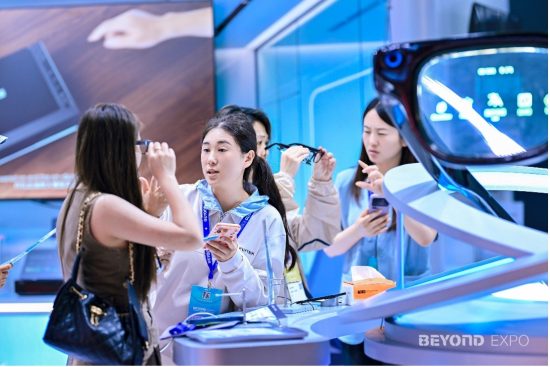
These programs reflected a growing recognition that innovation ecosystems are not built solely through venture capital, corporations, or accelerators. Communities of developers, open-source contributors, creators, students, and independent builders increasingly play an important role in identifying opportunities, experimenting with new technologies, and accelerating adoption. The fact that one of the youngest participants in the AI Hack Day was only nine years old underscores how rapidly access to technology and entrepreneurial tools is expanding.
BEYOND Expo 2026 showcased many of the technologies currently shaping conversations across the global innovation ecosystem, from robotics and AI-powered hardware to smart wearables, autonomous systems, and next-generation consumer products. Yet some of the event's most important signals were not technological.
The growing emphasis on one-person companies, developers, startup competitions, founder storytelling, hackathons, and builder communities points to a broader transformation occurring within entrepreneurship itself. As AI lowers barriers to company creation, product development, and global distribution, innovation is becoming accessible to a wider range of participants. Founders no longer need large teams to build products, and developers increasingly have pathways to become entrepreneurs.
If BEYOND Expo 2026 offered a glimpse into the future, it was not simply a future defined by smarter technologies. It was a future shaped by a growing generation of builders capable of turning those technologies into businesses, products, and entirely new categories of innovation.
Related Article List
 10 AI Startups That Drew Attention at BEYOND Expo 2026
 Korean-American Is First To Benefit From A “Startup Visa” In Korea
 Calling Asian Manufacturers in Internet of Things, Wearables, and Hardware Innovation: Showcase At beLAUNCH for FREE
 Seoul Global Startup Center (SGSC)’s 2020 Demo Day for global startups goes virtual on December 29th
 BEYOND Expo 2026 Unveils “AI: Digital to Physical” as Its Official Theme